
Does artificial grass drain well?
Why some backyards never seem to dry out
If your backyard turns muddy after rain, you’re not alone.
It usually starts small. A soft patch that holds water a little longer than the rest. A section that gets worn down faster. Over time, those areas become harder to manage, especially through winter.
What looks like a surface problem is usually something happening underneath. Water isn’t moving through the ground properly. The soil becomes compacted. Grass thins out and stops protecting the surface. And once that cycle starts, it’s difficult to reverse.
If you’re seeing this already, it’s often part of a bigger pattern. We’ve covered how these muddy areas develop in more detail here.
What’s actually happening when drainage fails
Natural lawns rely on a balance between soil, grass, and water movement. When that balance is off, even small amounts of rain can start to build up on the surface. Instead of draining through, water sits, softens the ground, and makes it more vulnerable to wear.
Once the surface breaks down, it becomes harder for grass to recover. That’s why muddy areas tend to spread over time rather than stay contained.
In places like Christchurch and across the South Island, this is even more noticeable. Colder temperatures, ongoing moisture, and frost slow down recovery and keep the ground softer for longer. That’s why some lawns never fully dry out, even when the weather improves.
How artificial grass drainage works
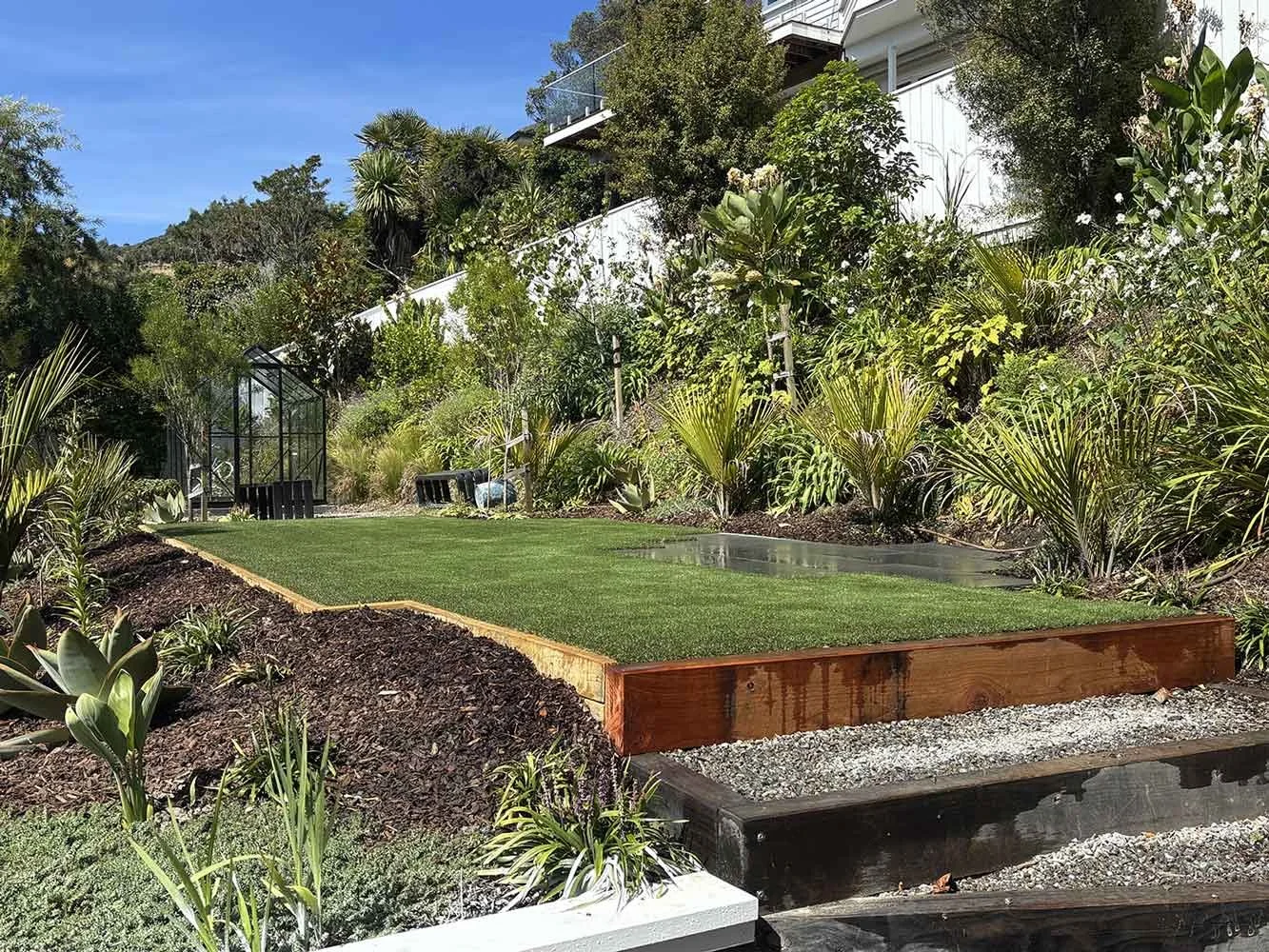
Artificial grass handles water differently because it’s built as a system, not just a surface. Instead of relying on soil to absorb water, it allows water to move through the turf and into the layers beneath. From there, it drains away rather than sitting on top.
At a high level, this comes down to two things:
A permeable surface that lets water pass through
A base underneath that directs water away
This changes how the space behaves after rain. Instead of holding moisture, the surface dries faster. Instead of soft patches forming, the ground stays more stable and usable.
If you want to understand how that base and setup works in more detail, you can read more here.
How it compares to natural grass
Natural grass can drain well when conditions are right. But it’s highly dependent on soil quality, sunlight, weather, and how the space is used. Artificial grass removes much of that variability.
It doesn’t rely on growth or recovery cycles. It doesn’t thin out under pressure. And it doesn’t expose soil in the same way when areas wear down. That consistency is what makes the biggest difference over time.
The space stays usable more often, even through wetter months, and doesn’t shift between good and bad conditions depending on the season.
Common concerns about drainage
A lot of questions around artificial grass come back to drainage.
Will water sit on top?
Will it smell?
Will it get worse over time?
When installed properly, the answer is no.
Because water moves through the system rather than sitting in soil, it reduces the conditions that usually cause those issues. It also helps keep the surface cleaner and more predictable to use day to day.
If you’re looking at artificial grass as a solution, it’s less about covering the problem and more about changing how the space handles water altogether.
That’s also why it tends to work best in areas that consistently struggle, something we’ve covered here.
Where drainage makes the biggest difference
Drainage improvements are most noticeable in the areas that used to cause the most frustration.
Backyards that become muddy through winter
Sections that never dry out properly
Shaded areas where grass struggles to grow
Spaces used heavily by kids or pets
Rather than avoiding these areas, they become usable again. That’s often the biggest shift, not just how the lawn looks, but how much more of the space you can actually use.
A better way to think about drainage
Fixing drainage isn’t about managing water on the surface. It’s about changing how it moves through the space.
Once that changes, everything else becomes easier. The lawn holds up better, the space stays cleaner, and you’re no longer adjusting how you use it depending on the weather.
If your backyard is already showing signs of poor drainage, it’s usually worth stepping back and looking at the structure underneath, not just the surface.
Not sure if drainage is the issue in your backyard? Book a site check and get a clear view of what’s happening beneath the surface